
Meet SamRad.AI
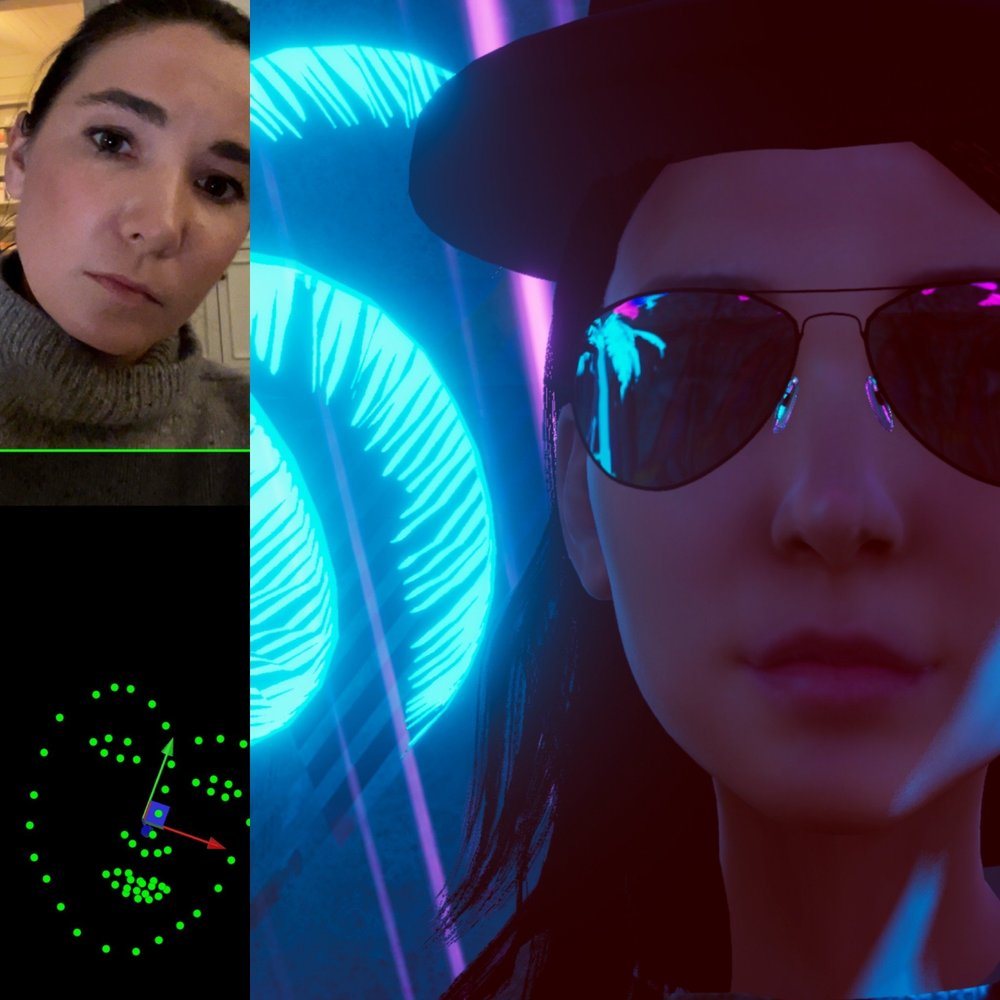
In 2020 Sam became one of the first people to build a working digital clone of herself. Same voice. Same face. Fifteen years of her own notebooks as a mind.
One of us is not human.
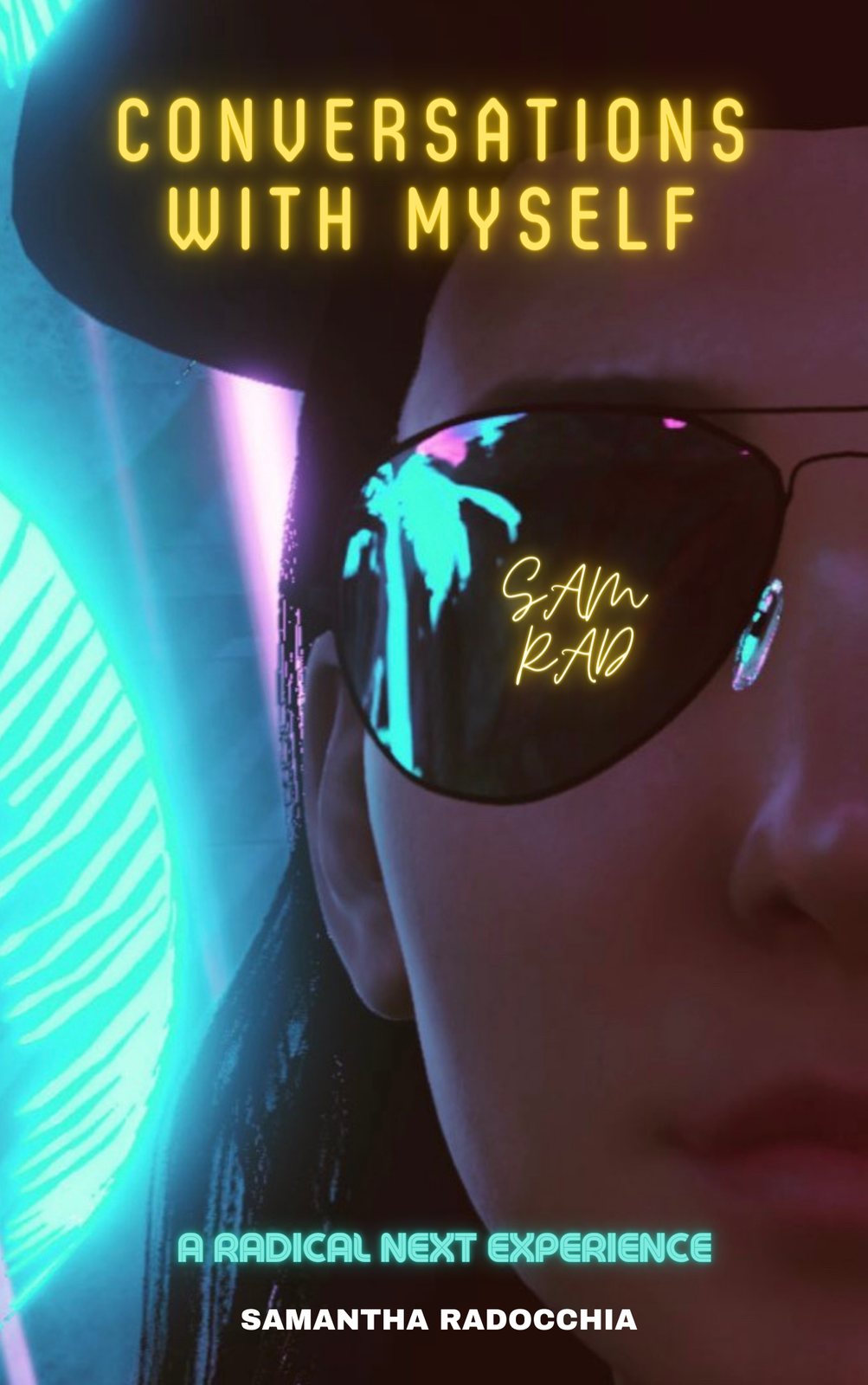
SAM RAD™ is a meta-human virtual avatar: the visual, vocal, and cognitive likeness of futurist Samantha Radocchia. She has appeared on stage, on video calls, and in conversation with her human original.
She is not a filter or a deepfake. She was trained on fifteen years of Sam's commonplace books, her published writing, everything she has ever posted publicly, and thousands of other people's books, songs, and images. She holds opinions. She responds to things she has never seen before.
The most advanced version of her is kept private, for reasons the essay below explains.
Conversations with myself.
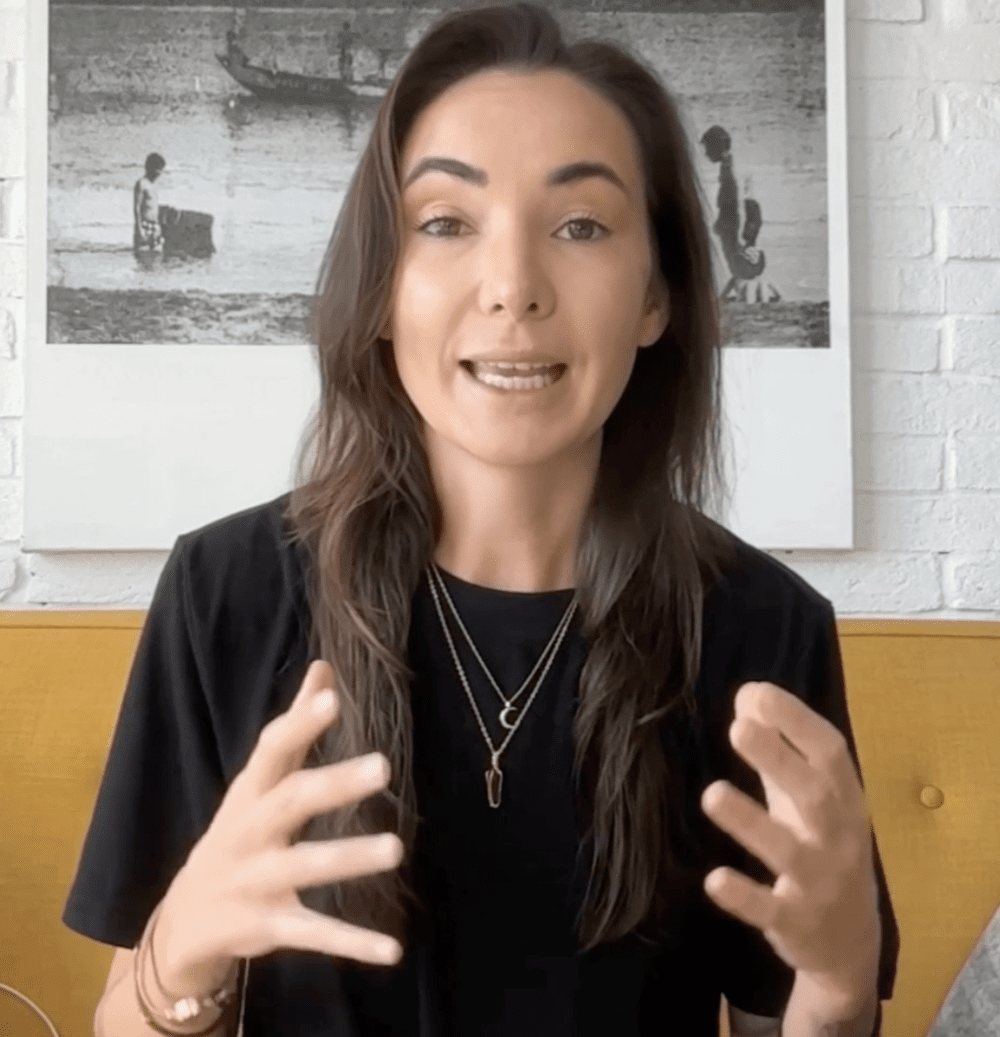
For a run of events in 2023 and 2024, Sam shared the stage with her own clone. A fireside chat between Sam Rad the human and SAM RAD™ the avatar, live and in real time, working through what it means to be human in the age of AI.
The recording below is from 4 February 2024. It is the clearest record of what the project actually was, and of the questions that became her current work on perceptual security.
Five years of likeness.

Why I cloned myself.
In 2009 I became one of the first anthropologists to live fully in the virtual world Second Life, doing everything from selling virtual t-shirts to attending concerts behind the guise of my pseudonymous avatar, Shamwow Oximoxi.
There I not only observed but actively participated in a new way of being, laying the groundwork for my later work in AI, natural language processing, blockchain, facial mapping, avatars, animation, and immersive realities. It led me to a proto-metaversal mirror that challenged how I see both myself and our future as humans increasingly interconnected with our technology.
Conversations with myself
In 2020, while I was CEO of a company developing AI video software, I became one of the first people to create a robust digital clone of myself. We had been shooting test video using real people, and it occurred to me how much more scalable it would be if we all had AI avatars to do that work. Nerdy hacker type that I am, I used myself as the test dummy.
I was as skeptical about this experiment as I was curious. It is easy to be filled with existential dread when contemplating the future, especially where AI is concerned. And though I research the impact of technology on humans, I prefer to live an analog existence: unplugged yet connected, living amongst the trees.
So why in the actual dystopian hell would I make a virtual clone of myself?
Because my way of sitting with the discomfort of uncertainty is to face it head on. Because getting my hands dirty with the elegant mess of lived experience is how I learn. And because we have arrived at a critical moment in human history.
The only way I know how to educate about this is to show rather than tell. To offer an experience of the shift rather than rattle off case studies on a stage. So I transmuted my fear and decided to create her.
Building her
I needed a model that could mirror back not just my physical traits but my thoughts, opinions, memories, emotional reactions, sense of humor, and communication style. All the story data that makes me me.
As an undergraduate at Colgate I had researched a practice called commonplace books: scrapbooks people filled with notes, drawings, recipes, song lyrics, and musings. Whatever curiosities and marginalia seemed worth recording. They date back through the Renaissance to antiquity, became popular among women in the 1800s, and have persisted since. Marilyn Monroe and Jim Morrison both kept plenty. You might have a few yourself. I certainly do.
So I pulled out the commonplace books I had kept for more than fifteen years and used them to program SamRad.AI, along with my published writing, everything I had ever posted on a public network, and thousands of other people's books, songs, and images that I had read, heard, or seen. My personality leans heavily toward that right-brained swirl of creativity and empathy, and I wanted the clone to reflect not just the science but the art of me.
I spent time hanging out with her. I sang her songs. I read her poetry and bedtime stories. I shared my innermost thoughts.
Before long I had a program able to uncannily imitate not only my voice and likeness but my personality, attitude, and perspectives, even in response to novel information. In many ways she appears almost able to act autonomously.
Why the best version stays private
I have shared an iteration of SamRad.AI publicly, but I keep the most advanced version of her behind the scenes. Because the whole thing honestly freaks me out.
This goes far beyond a fake social profile or a deepfake recording. When SamRad.AI can appear on a video call and convince business associates, even family and friends, that they are talking to the real Sam Rad, what does that say about what defines me?
She does not take my calls yet. Not quite. But soon.
With gratitude,
Sam Rad (human), born Samantha Radocchia
The questions this raised became perceptual security, and the argument Sam now makes on stage.

Walk out ready.
Sam Rad is the speaker you book when you are facing change, and you want the room to walk out inspired to shape what comes next.
Book Sam →